

The Haft-Sin is the table Iranians set for Nowruz, the Persian new year, which begins at the spring equinox around 20 March. It takes its name from seven items whose Persian names start with the letter sin, and each one stands for something wished for in the year ahead. Most tables also carry a mirror, candles and a book of poetry.
The seven S items
| Item | Persian | What it stands for |
|---|---|---|
| Sabzeh | سبزه | Sprouted wheat or lentils — rebirth and new growth |
| Samanu | سمنو | A sweet wheat pudding — abundance and strength |
| Senjed | سنجد | Dried oleaster fruit — love |
| Sir | سیر | Garlic — health |
| Sib | سیب | Apples — beauty |
| Somaq | سماق | Sumac — the colour of sunrise |
| Serkeh | سرکه | Vinegar — age and patience |
Some households swap one in or out — sekkeh (coins) and sonbol (hyacinth) are the usual substitutes. There is no single correct list, and arguing about it is part of the tradition.
What else goes on the table
The seven are the frame, not the whole. Beyond them, most tables carry:
- A mirror, placed at the back, for reflection and for light
- Candles, usually two or one for each family member
- Painted eggs, for fertility
- Goldfish in a bowl, for life — though many families now use a ceramic or glass fish instead, on welfare grounds
- A book of poetry — most often the Divan of Hafez, sometimes the Shahnameh, or a religious text depending on the household
- Fresh hyacinth, for the smell as much as the look
Setting one when nothing was handed down
If you grew up outside Iran, you may be setting a Haft-Sin without the things a table like this usually inherits: no grandmother's mirror, no family silver, no calligraphed Divan passed down a generation.
This is now the common case rather than the exception, and it has quietly changed how the table looks. A generation is building the Haft-Sin from scratch, in apartments in Los Angeles, Toronto, London and Sydney, and choosing pieces that suit the room they actually live in rather than replicating a table they only half remember.
Some practical notes for building one from nothing:
Start the sabzeh about two weeks ahead. Wheat, lentils or mung beans on a shallow plate, kept damp. This is the one item you cannot buy at the last minute, and the one children remember.
Keep the palette to two colours plus the greens. Turquoise and gold, or cream and pomegranate red. A Haft-Sin photographs well when it is restrained; the seven items already bring plenty of texture.
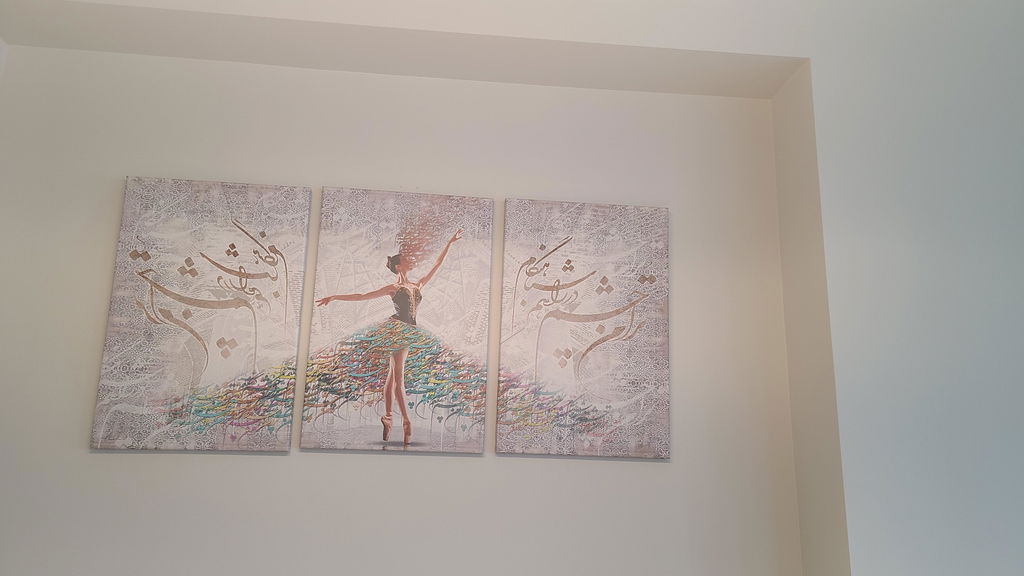
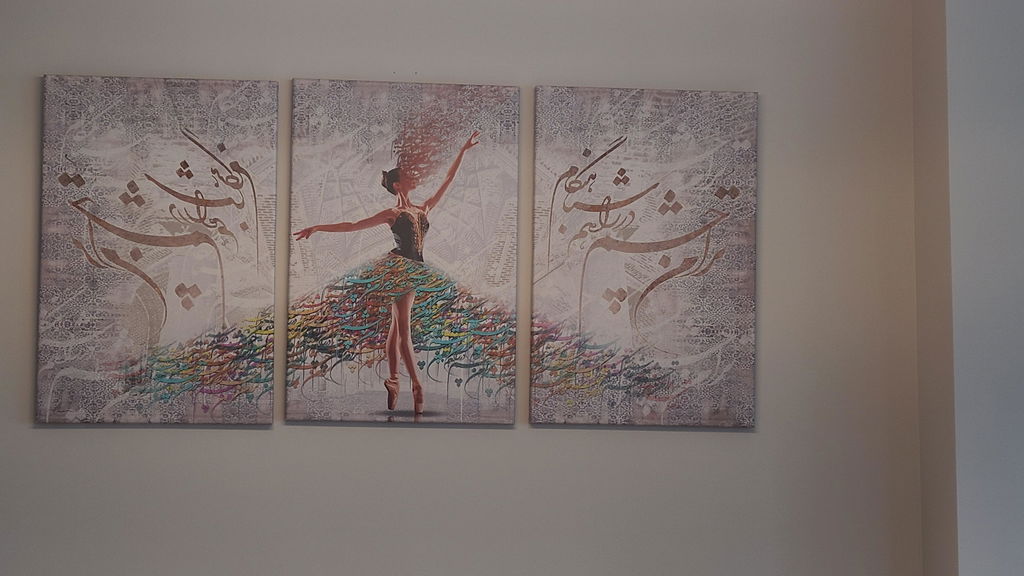
The mirror is the hardest thing to buy well. Most ornate options look wrong in a modern room. A plain round mirror with a piece of Persian calligraphy behind or beside it does the same job and does not look borrowed from another century.
The poetry can be on the wall rather than on the table. If you do not own a Divan, a framed line of Hafez behind the table carries the same meaning and stays up after the thirteen days are over.
The wider Nowruz calendar
| When | What |
|---|---|
| Weeks before | Khaneh-tekani — literally shaking the house, the deep spring clean |
| Eve of the last Wednesday | Chaharshanbe Suri — jumping over small fires |
| Spring equinox, around 20 March | Sal Tahvil — the exact moment the year turns, watched to the minute |
| Days 1–12 | Did-o-bazdid — visiting family, oldest first |
| Day 13 | Sizdah Bedar — a day outdoors; the sabzeh goes into running water |
The equinox is astronomical, so Nowruz shifts by a few hours each year and can land on 19, 20 or 21 March depending on your time zone. Families check the exact minute and gather for it, wherever they are.
Gifts
Eidi — the Nowruz gift — is traditionally money from elders to children, often crisp new notes. Between adults, the convention is lighter: something for the home, flowers, sweets.
For families abroad, a piece for the wall has become a common choice, partly because it lasts beyond the season and partly because it solves the same problem the Haft-Sin does — making a home carry something of where you are from. Pieces built around Iran and homeland and around Persian calligraphy are the ones most often bought as eidi from our own catalogue.
If you are buying for a wall you have not measured, the size guide is worth five minutes first. And if you are setting up a room around the table rather than just the table itself, the Persian home decor guide covers palette and placement.
Questions
When is Nowruz?
At the spring equinox, around 20 March. The exact time is calculated astronomically and differs by time zone.
Do I need all seven S items?
No. Households substitute freely, and coins and hyacinth are common stand-ins. The intent matters more than the checklist.
How long does the Haft-Sin stay up?
Thirteen days, until Sizdah Bedar.
Why a book of poetry?
Persian households treat poetry as guidance, not only literature. The Divan of Hafez is opened at random and read aloud for the year ahead — the practice known as fal-e Hafez.
What do I do with the sabzeh afterwards?
On the thirteenth day it is thrown into running water, carrying the year's bad luck away with it.