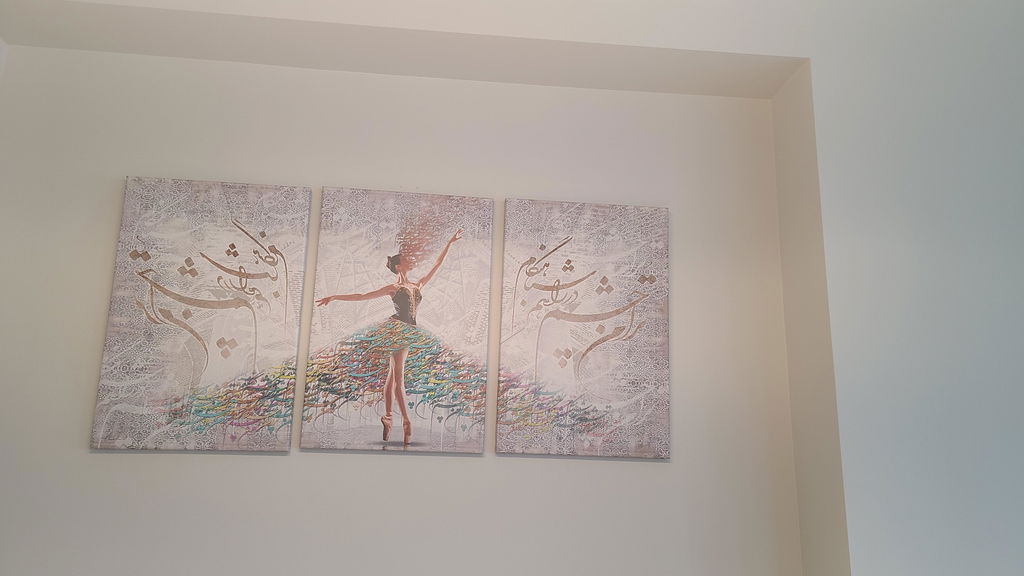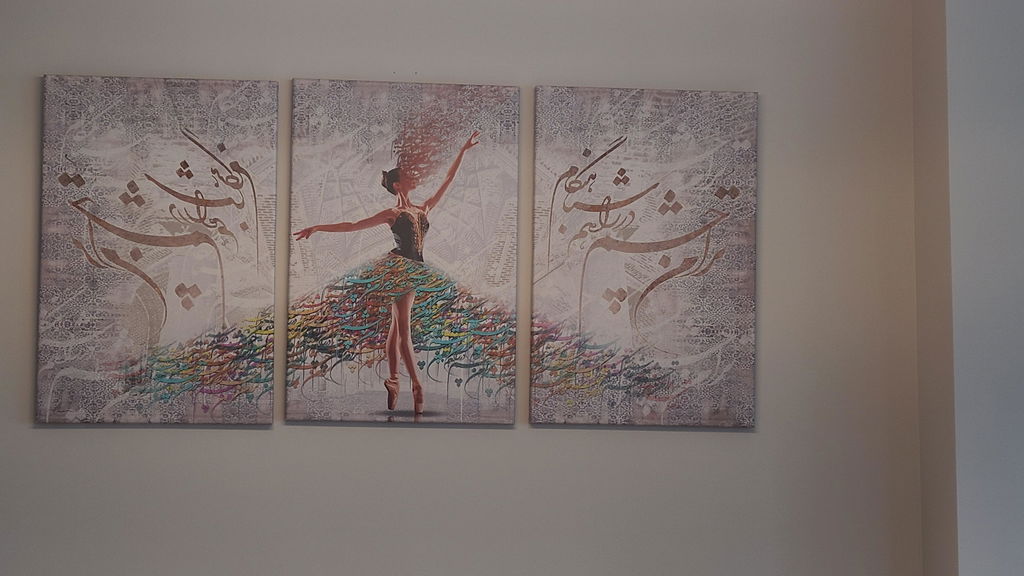


Rumi wrote in Persian in the thirteenth century, and his two major works are the Masnavi and the Divan-e Shams. His most quoted lines return to a small set of subjects: love as a force that changes the person who feels it, the whirling sama dance, separation from the beloved, and hich — nothingness — understood as freedom rather than emptiness.
Who Rumi was
Jalal ad-Din Muhammad Rumi was born in 1207, most likely in Balkh in what is now Afghanistan, and died in 1273 in Konya, in present-day Turkey. He wrote in Persian, taught as a scholar of Islamic law, and is claimed today by Iran, Afghanistan and Turkey alike.
The turning point in his life was his meeting with the wandering dervish Shams of Tabriz around 1244. Rumi was a respected teacher in his late thirties; Shams unsettled everything he had built. When Shams disappeared a few years later, the grief produced the Divan-e Shams, a collection of ghazals Rumi signed with his friend's name rather than his own.
The two books
| Masnavi | Divan-e Shams | |
|---|---|---|
| Form | Around 25,000 couplets in six books | Roughly 40,000 lines of ghazals and quatrains |
| Voice | Teaching — stories, parables, argument | Ecstatic — written in and about intense feeling |
| Nickname | Called the Persian Quran by some readers | Signed with the name of Shams |
| Where the wall-art lines come from | Mainly the opening | Most of them |
The lines you see most often
A small number of couplets carry most of Rumi's presence in Persian homes. The English underneath each is a plain rendering of the sense, not a literary translation.
The reed flute, opening the Masnavi
بشنو این نی چون شکایت می کند
از جدایی ها حکایت می کند
Listen to the reed and how it complains; it is telling the story of separations. The reed has been cut from the reed bed, and its music is the sound of that cut. Rumi opens his largest work with an image of longing, and everything after it follows from there.
Dance is my desire
یک دست جام باده و یک دست جعد یار
رقصی چنین میانهٔ میدانم آرزوست
A cup of wine in one hand, the beloved's curl in the other — to dance like that, in the middle of the arena, is what I want. The dance here is not entertainment. It is entering life without holding anything back.
You are my life and world
تو مرا جان و جهانی چه کنم جان و جهان را
You are my life and my world — what would I do with life and world? One of the most common lines to give as a gift, because it works equally as devotional verse and as something you would say to a person.
I was dead
مرده بدم زنده شدم گریه بدم خنده شدم
I was dead and came alive; I was weeping and became laughter. The whole line is a sequence of reversals, and it is Rumi's clearest statement that love is not a feeling you have but a change you undergo.
The English Rumi you have probably read
Rumi is regularly described as the best-selling poet in the United States. Most of that reading has come through Coleman Barks, whose versions since the 1970s brought Rumi to an enormous English-speaking audience.
Barks does not read Persian. He works from earlier scholarly translations — chiefly Reynold Nicholson and A. J. Arberry — and reworks them into free verse. The results are memorable, and they are why most people in the West have heard of Rumi at all.
They have also been criticised, including by Persian-speaking readers, for smoothing away the Islamic and Quranic references that run through the originals. Rumi was a Muslim scholar who quoted the Quran constantly; a good deal of that disappears in the popular English versions. It is worth knowing when a line you love turns out to have no clear equivalent in the Persian.
None of this is an argument against reading Barks. It is an argument for knowing which Rumi you are reading.
The themes that keep returning
Love as transformation. Rumi's eshgh is not affection. It is closer to a solvent — something that dissolves the self that felt it. This is why so many of the lines describe becoming rather than having.
The sama. The whirling dance associated with the Mevlevi order that formed around Rumi after his death. In the poems it stands for surrender: turning until the turner is no longer keeping track.
Hich. Nothingness. In everyday Persian it is a dismissal, but in Rumi it is an achievement — the state left once the self stops asserting itself. It is one of the most commonly requested words in Persian calligraphy art for exactly this reason.
The beloved. Persian poetry keeps the beloved deliberately unfixed. The same line can be read as addressed to God, to Shams, or to a person, and Persian readers have never felt the need to settle it.
Reading Rumi in Persian
Rumi rhymes and scans, and a great deal of the effect is sound. Even Persian speakers who do not follow every word feel the metre pull the line forward, which is part of why the poems are sung as often as they are read.
This is also why the calligraphy matters. Nastaliq, the script used for most Persian poetry, has a sloping baseline that lets a line be arranged as a shape rather than a straight row of text. Set well, the visual rhythm carries something of the metrical one.
Rumi on the wall
ORIAVI produces Rumi's verses on gallery canvas in the original Persian, set in nastaliq. You can browse them in the Rumi wall art collection, or look at the pieces where the script itself is the subject in Persian calligraphy wall art. If you are working out what size to order, the size guide covers it.
For the other poets, see Hafez, Saadi and Ferdowsi.
Questions
What language did Rumi write in?
Persian, with some Arabic, Turkish and Greek appearing occasionally.
What is Rumi's most famous poem?
The opening of the Masnavi, known as the Ney-nameh or Song of the Reed. In the West, individual lines from the Divan-e Shams circulate more widely.
Was Rumi a Muslim?
Yes. He was a scholar of Islamic law and a Sufi, and the Quran runs all through his work — which is one reason the softened English versions are contested.
Who was Shams of Tabriz?
A wandering dervish whose friendship with Rumi around 1244 reshaped his life and his writing. Rumi signed the Divan with his name.
Where is Rumi buried?
In Konya, Turkey. His tomb is among the most visited sites in the country.